I Am Throwing In The Towel..

Status
Not open for further replies.

celtic945

New Member
Joined
Feb 4, 2026
Messages
12
Reaction score
11
Credits
305
I ran Bazzite for over 8 months successfully with the following exception - audio. I was able to get Teams audio working fairly well using Easy Effects but the USB speaker I have connects and disconnects constantly thus I cannot make reliable calls. It seems to be a common Linux issue. I have tried everything to fix it including using opencode to modify the audio files in Bazzite. No luck. I have been at it for over 3 months including purchasing a new USB hub.

I absolutely love Bazzite and Linux but audio is a huge challenge. I rely so much on Teams and making reliable calls that I can't continue to struggle with it. So unfortunately, I am going back to Windows until I can find a way to fix this Bazzite issue. I am keeping Bazzite installed on my 2nd laptop in the hopes I can find a way to fix it eventually.

For now, it's back to Windows for me.


Sorry to see you go. Best wishes and best of luck.

I hope the patch you need comes through soon. This is not a goodbye, rather a 'we'll meet again.
Best wishes,

Warp9

PS- I'll be willing to give it a shot on Fed 44 on my Mac once I get it installed. If I find anything, I'll post here again.
But I must ask if it is the web app? Once I get this Mac fixed, I'll give it a shot.
 
Last edited:
It's so frustrating because I absolutely LOVE Bazzite! Apparently Linux struggles with USB ports related to audio sometimes.If anyone knows how to get a USB speaker (two way audio) working with the standard RIOS drivers, I will appreciate it. I am already feeling the pain of booting into Windows.
 
I tried using opencode to fix the audio issues because it can usually track down any Linux issues. It wasn't able to fix it and came back and told me this is a rather common problem. I do have another ASIO audio interface I can try and see what luck I have with it.

Everything else works so dam good!
 
Don't give up just yet. :) You can install Windows inside virtual machine and use Teams, or that USB speaker there. Redirecting USB devices for Windows VM to use exclusively is also not a problem. Give it a try - install VirtManager, otherwise called libvirt.
If that solution doesn't work for you, then:
  1. we will meet here even eventually anyway :)
  2. Consider obtaining non-USB sound system. You have dedicated audio outputs on your motherboard for that - use them.
 
Microsoft Teams was abandoned in 2022 for Linux

All users on the Microsoft Teams Linux desktop client will have to transition to the web or PWA version, which is where we will continue to invest our development resources.
Firefox does not support PWA (Progressive Web App) you will have to use Microsoft Edge or Chrome browser it can do PWA

There is a "Portal for Teams" on Flathub but it is not official and problematic on some systems

As far as I know you have to have a Microsoft account to get the PWA version
 
I've always used the web-app (or PWA as they like to call it these days). Even before Skype was "sunsetted" & everyone was 'migrated' to Teams, I found it simpler to use in the browser; it was always easier to select the microphone & speakers/headphones/headset I wanted to use, since the Chromium-based browsers have always had a superior audio detection routine.

I used to set-up my own webapps using the native tools, long before the PWA function was offered. Which let me set-up desktop 'apps', running in their own window, and which could be started from their own Menu entry.

I don't know why, but since Mozilla switched Firefox's 'requirement' to PulseAudio-only as of v57, they also saw fit to delegate audio selection to the 'global' audio setting within the OS itself. Which is absolutely fine for laptops, since these always come with microphone and speakers built-in.....but you try selecting separate speakers and/or microphone that you've had to add to a desktop rig.

It's a frickin' nightmare. So for owt that requires selectable audio components on a desktop rig, FF doesn't even get a look-in these days as far as I'm concerned. With the Chromium clones, you can always select whichever individual audio components you want.....especially important with desktops, where many folks often have multiple input/output devices available.

Sorry, Mozilla, but ya f**ked-up BIG time with that decision.....'cos you took the path of least resistance, and automatically assumed everybody uses a laptop.

If the 'clones' can offer individual device selection, why can't you? It's yet another reason why FF is steadily losing popularity with users.....

(Unless anybody here knows of a way round the issue..?)


Mike. :confused:
 
Last edited:
Yea, I just don't have time to f around with all these settings and changes. I wish it wasn't so difficult to get basic audio working on Linux. Again, I love the OS but it's the little things that just suck all the time.
 
I've always used the web-app (or PWA as they like to call it these days). Even before Skype was "sunsetted" & everyone was 'migrated' to Teams, I found it simpler to use in the browser; it was always easier to select the microphone & speakers/headphones/headset I wanted to use, since the Chromium-based browsers have always had a superior audio detection routine.

I used to set-up my own webapps using the native tools, long before the PWA function was offered. Which let me set-up desktop 'apps', running in their own window, and which could be started from their own Menu entry.

I don't know why, but since Mozilla switched Firefox's 'requirement' to PulseAudio-only as of v57, they also saw fit to delegate audio selection to the 'global' audio setting within the OS itself. Which is absolutely fine for laptops, since these always come with microphone and speakers built-in.....but you try selecting separate speakers and/or microphone that you've had to add to a desktop rig.

It's a frickin' nightmare. So for owt that requires selectable audio components on a desktop rig, FF doesn't even get a look-in these days as far as I'm concerned. With the Chromium clones, you can always select whichever individual audio components you want.....especially important with desktops, where many folks often have multiple input/output devices available.

Sorry, Mozilla, but ya f**ked-up BIG time with that decision.....'cos you took the path of least resistance, and automatically assumed everybody uses a laptop.

If the 'clones' can offer individual device selection, why can't you? It's yet another reason why FF is steadily losing popularity with users.....

(Unless anybody here knows of a way round the issue..?)


Mike. :confused:
Honestly, you make a very fair point about Firefox and audio handling on Linux — especially on desktop setups where people often have multiple USB mics, DACs, headphones, and separate speakers connected at the same time. I ran into the same issue myself after moving from Chromium, and eventually I ended up keeping Firefox only for regular browsing while using Brave/Chrome for calls and PWAs because audio management there is just far less frustrating. You could also try PipeWire together with pavucontrol or Helvum, since sometimes they let you reroute individual audio streams properly even when Firefox itself behaves strangely. A lot of Linux users also say that PipeWire handles these kinds of setups much better than the old PulseAudio stack ever did.

Here’s a really useful channel about Linux audio, PipeWire, and similar topics that might help you troubleshoot things further:
https://www.youtube.com/@BrodieRobertson
 
Here’s a really useful channel about Linux audio, PipeWire, and similar topics that might help you troubleshoot things further:

Hmm... Are you affiliated with that channel?
 
I appreciate all the feedback. The problem is that I work 10+ hours a day and can't afford to have downtime especially with calls. Although Windows has issues, I rarely have issues with audio or having to figure out whether to use pipewire or pulse audio and which browser to use because of audio problems. I wish the Linux community would just agree on one solution and put all their efforts into making the one solution work flawlessly.

If we are being totally honest, the email client situation is still horrible. I ended up using Evolution because it's the closest thing to Outlook that works reliably but it's still years behind Windows email clients. Furthermore, Microsoft Office is just so much easier and more powerful compared to every other office suite. I use Only Office and it's pretty close to Microsoft Office but it's still not there. Simple things like how to cut and paste a row is still challenging because you have to figure out the key combinations for your distro. Large spreadsheets take 30+ seconds to just sort or expand rows.

For Linux to take anything over than a 10% share, the community needs to be honest and provide solutions that are the same or better than Windows software. Libre Office looks like it is still stuck in the mid 90s. Evolution is missing simple things like scheduling a Teams meeting from the invite. Inviting people to a meeting is an option you have to enable every time on every invite. As much as we don't like it, Microsoft still commands a majority of the corporate world and until someone can provide better solutions, it will remain like this.

I hope after Linux gets some more market share, more companies will put effort into the apps and OS. I see the potential and it's better than it's ever been but it's still not there for people who work in the corporate world or use their desktop for audio production at a pro level. Asking a regular user to edit config files or chase down pulse audio settings is simply not going to happen when they have the choice of a Mac or Windows OS where they don't have to do any of that.

I also find that Linux does a piss poor job of handling USB ports when you machine hits over 70% memory usage. My keyboard and mouse will drop out during high usage periods. Everything seems to be centered around how Linux handles USB devices specifically related to audio and the complexity of the newer devices.

This entire Bazzite thing has cost me a great deal of hours trying to make this audio issue work along with the USB port issues. Now I am spending time moving my data back to Windows because I can't spend anymore time on fixing these problems.

I am not trying to bash Linux because I love Bazzite. The desktop experience is incredible and it's super solid. I just hope it gets to a point one day where some of these issues get worked out without users having to mess with complex config files to get basic functionality stable. From using it for 8+ months, it's about 90% there. If they can close the gap on the remaining 10% of the problems, they will have an unstoppable OS.

For example, when I play Helldivers 2 on Steam, I get crackling in the audio on an ASIO professional device when memory and CPU/GPU usage goes past 60%. I tried everything in my power to resolve it. My USB speakerphones connects and disconnects endlessly until I reboot and I will get about 1 hour of use out of it until it starts doing it again. Mapping a drive to a Windows share is 6+ commands at the command line when I can do the same with 2 clicks in Mac or Windows.

I run Linux for all my servers because hands down it's the best. Now if the desktop side can catch up and close the gap, it's going to take over the market. It's so close but it's not there yet for what I need. It takes far too much effort compared to Windows or Mac OS in the present state.

This is about the 4th time I have tried to make the jump from Windows to Linux and this is the closest I have ever gotten to completely replacing Windows long term.
 
@celtic945 :-

I wish the Linux community would just agree on one solution and put all their efforts into making the one solution work flawlessly.
You're not the first person to have said this.....and summat tells me you definitely won't be the last.

Certain key figures among the Red Hat cognoscenti have floated something along these lines in recent years.....their "suggestion" being that ALL Linux distros should give up their individuality for the sake of the community, combine into one single distro simply called Linux - thus making for easier, more recognisable "marketing", natch! - and that the whole thing should be controlled by Red Hat, since their devs contribute more towards the Linux kernel than everyone else combined.

You should have heard the uproar this "suggestion" caused. Personally, I don't see this ever happening, because people are too attached to their individual distros.....it's "tribalism" in full display.

(I'm no different, if I'm honest; I'm too attached to 'Puppy' to ever change, because in concept she's unique amongst distros, and will pull stunts that most others would be frightened to even try, for fear of 'bricking' their systems. I LIKE the fact that 'Puppy' will let me pull my system to bits, and completely re-build it to suit myself IF I want to.....without any danger of making it unusable.)

That total freedom to experiment is invaluable. But it's NOT for everyone, and I'll be the first to admit that.

~~~~~~~~~~~~~~~~~~~~​

Despite all the talk over the years about the "year of the Linux desktop", it'll never happen.....and if we're honest, most Linux users aren't interested in trying to "beat" Microsoft & Apple at their own game and becoming 'top dog'. Linux runs most of the world's servers, and ALL of the world's supercomputers already; why would we be bothered about ruling the roost on the desktop, too? Doesn't make sense.

(IF you include Android, we have a major share of the personal computing space, too.....for Android is built on top of a custom Linux kernel.)

If the truth be known, the old aphorism is still true; Linux users don't care if it's good enough for YOUR desktop, so long as it stays good enough to remain on theirs....

(shrug...)

You did at least give it the old "college try". You're to be commended for putting in as much time as you did, because many would have given up LONG before that.


Mike. ;)
 
Last edited:
This is the exact attitude and reason Linux will never take over the desktop - this exact attitude.

While I can relate to the sentiment, what else would you expect him to say? You've made up your mind, and others have tried to help you stick with it.

It's sort of like any online community. You don't have to announce that you're leaving, and people aren't obligated to convince you otherwise.

If you announce that you're going to smash your head off a wall, I'm going to suggest that you consider not doing so. If you absolutely insist on doing it, I'm going to step aside and probably watch while wishing I had a bag of popcorn.

Finally, they're just one member of a large community. You have many others who are still willing to help you, who are still rooting for you to get things sorted out and stick with Linux long-term. It's a big tent, and there are many people underneath it.
 
@celtic945 :-


You're not the first person to have said this.....and summat tells me you definitely won't be the last.

Certain key figures among the Red Hat cognoscenti have floated something along these lines in recent years.....their "suggestion" being that ALL Linux distros should give up their individuality for the sake of the community, combine into one single distro simply called Linux - thus making for easier, more recognisable "marketing", natch! - and that the whole thing should be controlled by Red Hat, since their devs contribute more towards the Linux kernel than everyone else combined.

You should have heard the uproar this "suggestion" caused. Personally, I don't see this ever happening, because people are too attached to their individual distros.....it's "tribalism" in full display.

(I'm no different, if I'm honest; I'm too attached to 'Puppy' to ever change, because in concept she's unique amongst distros, and will pull stunts that most others would be frightened to even try, for fear of 'bricking' their systems. I LIKE the fact that 'Puppy' will let me pull my system to bits, and completely re-build it to suit myself IF I want to.....without any danger of making it unusable.)

That total freedom to experiment is invaluable. But it's NOT for everyone, and I'll be the first to admit that.

~~~~~~~~~~~~~~~~~~~~​

Despite all the talk over the years about the "year of the Linux desktop", it'll never happen.....and if we're honest, most Linux users aren't interested in trying to "beat" Microsoft & Apple at their own game and becoming 'top dog'. Linux runs most of the world's servers, and ALL of the world's supercomputers already; why would we be bothered about ruling the roost on the desktop, too? Doesn't make sense.

(IF you include Android, we have a major share of the personal computing space, too.....for Android is built on top of a custom Linux kernel.)

If the truth be known, the old aphorism is still true; Linux users don't care if it's good enough for YOUR desktop, so long as it stays good enough to remain on theirs....

(shrug...)

You did at least give it the old "college try". You're to be commended for putting in as much time as you did, because many would have given up LONG before that.


Mike. ;)
I appreciate the thoughtful and honest response. I agree exactly with what you are saying. Although open source brings a lot of innovation to the table, it also is the reason Linux isn't focused. How many different text editors does one OS need! Instead of building the 10,000th text editor, why not put the time into a better email client or making drive mappings easier - or fixing the USB/sound issues?

I think consolidating the distros down into 1 main distro would be a great idea. This way you have a central authority that can determine priorities and guide the OS to address real world problems. Why not have a central official distro but still let other distro exist outside of the core distribution and have the central distro guide what is priority.

Steam bringing gaming to Linux has been great because it's forced Microsoft to wake up and take out all the crap from Windows they recently put in no one wanted. The major issue I see is that Microsoft and Apple focus on real world problems and deliver real world solutions instead of being scattered in a million different directions.

For example, without a comparable email client and office suite at the same level of Microsoft's products, it's simply never going to get any significant market. The average person, like you said, is just going to continue to run Windows or Mac because the quality is there and they don't care about the politics of the OS world.

As much as people hate or bash Windows, Microsoft has a core focus on delivering what their customers need - especially in the business world. The applications are polished and offer features people need to get work done. When you use Only Office or Libre Office in comparison to Microsoft Office, it's such a huge delta in terms of quality. Just trying to work on complex spreadsheets outside of Excel is frustrating - and it's not because I don't know what I am doing. I took the time to learn both Libre and Only Office. For example, I needed to map a drive to one of my Windows Servers today to move some data and it's like 8 commands at the command line. It's ridiculous.

I love how Linux handles OS updates and application updates. Now that is years ahead of Mac OS and Windows. Linux is also super stable. Some parts are amazing. If they can just close the gap in terms of the issues we have been talking about, I think it has a real shot at some real market share. But I don't see it happening without a central authority demanding these issues get addressed.

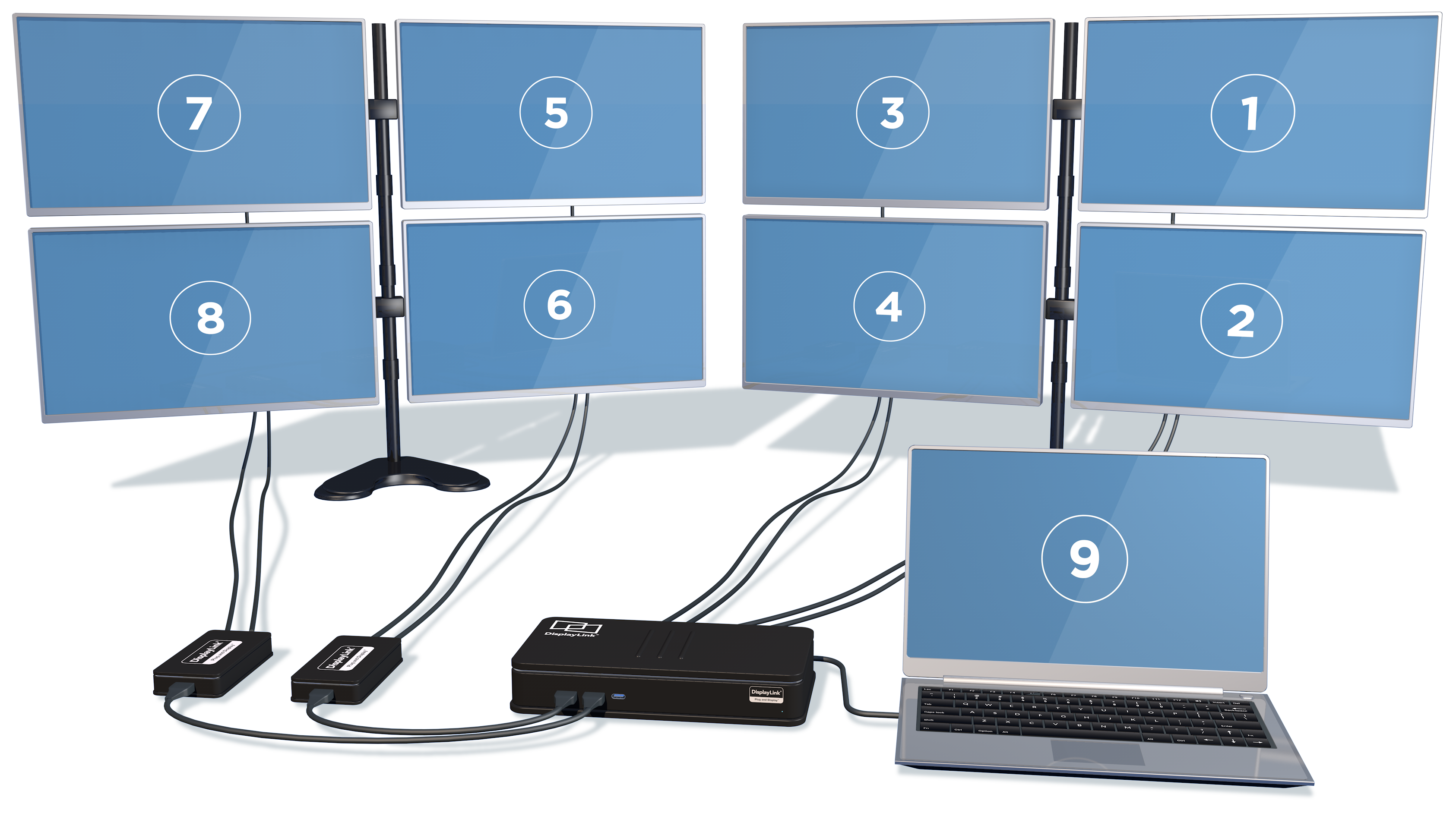
As another example, when I converted to Bazzite - surprise - we removed Displaylink recently! Your docking station is useless. I had to convert my monitors from my docking station to USB to Displayport adapters to get multi monitor support. People are simply not going to put up with that crap. Every other OS on the planet has Displaylink support except Linux. Come on!

Anyway - I made it much further along this time so hopefully in a few years I will try again and see if I can make the transition.
 
This is the exact attitude and reason Linux will never take over the desktop - this exact attitude.
LOL...you are easily offended/stirred.
When people come to Linux.org, asking the age old question...'which distro is right for me' ?.... the answer inevitabley has to be : 'the one that you choose, the one that fits your tasted/likes/dislikes/ etc. No one else can make that choice for you.
If the time arrives whereby you feel the need to move on/change distro/move back to windows/take up kite flying/whatever ...that decision is yours and yours alone.

It is my considered opinion that Linux has already taken over the desktop. Linux is brilliance in absolute spades.
There is a reason that Linux servers, rule the world.
 
This is the exact attitude and reason Linux will never take over the desktop - this exact attitude.
There's nothing wrong with saying a plain goodbye, since you were giving the impression you are leaving. If it was an attitude thing more words would and could have been added.
For example, when I play Helldivers 2 on Steam, I get crackling in the audio on an ASIO professional device when memory and CPU/GPU usage goes past 60%. I tried everything in my power to resolve it. My USB speakerphones connects and disconnects endlessly until I reboot and I will get about 1 hour of use out of it until it starts doing it again. Mapping a drive to a Windows share is 6+ commands at the command line when I can do the same with 2 clicks in Mac or Windows.
Can you share a link to the device you are having problems with, I'd maybe be interested in testing out that device myself if it's not too expensive just out of curiosity.
I appreciate all the feedback. The problem is that I work 10+ hours a day and can't afford to have downtime especially with calls. Although Windows has issues, I rarely have issues with audio or having to figure out whether to use pipewire or pulse audio and which browser to use because of audio problems. I wish the Linux community would just agree on one solution and put all their efforts into making the one solution work flawlessly.
Well Pulseaudio is old and Pipewire the new thing, some people still prefer to use Pulseaudio so that's why you have both. You have the same thing with X11 vs Wayland now, as a lot of distributions are still in a transition phase but some people still prefer to use X11 so then you get people who create forks of X11 to continue to be able to use it. It's what opensource is about, being able to use the code of an existing project if you like. But in short Pipewire should be the standard in most modern distributions and Wayland is getting there to also be that for most distributions with a few exceptions. In short it's quite hard to just jump from an old solution to a new solutions, you don't just do that from day one as there's always a transition phase.

And with how opensource people are now days, if someone doesn't like a direction a project is going it gets forked and continued under a new name. That has it's advantages and disavantages. But without that a lot of the development over the years wouldn't have been possible, for example Proton is a fork Wine with a lot of customization and that boosted Linux gaming. So it's not always all bad as both projects benefit from each other now.
As much as people hate or bash Windows, Microsoft has a core focus on delivering what their customers need - especially in the business world. The applications are polished and offer features people need to get work done. When you use Only Office or Libre Office in comparison to Microsoft Office,
I work with Linux for work and in the research field there seems to be more and more ask for Linux desktops, so will see where that leads.
As another example, when I converted to Bazzite - surprise - we removed Displaylink recently! Your docking station is useless. I had to convert my monitors from my docking station to USB to Displayport adapters to get multi monitor support. People are simply not going to put up with that crap. Every other OS on the planet has Displaylink support except Linux. Come on!
Seems there's displaylink drivers for Ubuntu.
However running an Immutable distribution that's going to be a pain as you would probably have to layer that into the image provided by Bazzite or something else and it seems they only have an Ubuntu driver package.

But they do mention this.
DisplayLink has not created drivers for other packages, however the Ubuntu driver contains an open source component which is designed to be modified to enable the Ubuntu driver to be repackaged for any other Linux distro by the user community. Details on how the Ubuntu driver package can be unpacked and modified for other distros is covered in this article.


Either way good luck and remember your os of choice is just a tool. Take care!
 
OP,

You said you're going back to windoze but you're still here.
I won't say bye...I'll say...

Have a nice life.
1779402813958.gif
 
Status
Not open for further replies.


Follow Linux.org

Staff online

Members online


Top