Returning to Tux

matrixloopx

New Member
Joined
Nov 12, 2025
Messages
6
Reaction score
7
Credits
66
Greetings everyone,

I ran Slackware back in the late 90s. I also dipped into CentOS in the early 2000s. I’ve been attracted to Linux for many years, yet it was always as a side project. The type of work I was doing was all Windows-based, and so, that’s where my main focus has been as far as operating systems are concerned. I am teaching myself a stack of technologies so that I can transition into DevOps. My attention has returned to Linux. This time I want to go beyond a surface-level understanding.

I'm currently running Ubuntu and plan on installing Rocky Linux to a VM as well. I'm studying for the LPIC-1 and I figure it will help to have hands on experience with not only APT but DNF and RPM as well.

The terminal is my favorite place to be. Nothing beats the command line. I like to tinker. I still have a lot to learn, but I'm enjoying the process.

I will probably lurk for a while, yet wanted to say hello.


Welcome @matrixloopx! Do you mean you are running Ubuntu as your desktop os and will be install Rocky Linux in a vm on your Ubuntu desktop?
 
Hello @matrixloopx
Welcome to the Linux.org forum, enjoy!
 
Nothing beats the command line.
Welcome to the forums!

Yes, terminal is 1 super thing, if you use it often and with diverse commands it's easy to memorize a lot of commands.
My startup into Linux was exactly the terminal so I've come up with a long list of must know commands in my signature below.

Knowing a lot commands brings many insights and keywords from man pages to learn and search more about.
 
Welcome to the forums
 
Thanks, everyone, for the warm welcome!

@f33dm3bits - I should have clarified. Right now I'm running Ubuntu 24.04 LTS as a VM in Hyper-V on a Windows machine. I plan on doing the same with either Rocky Linux or AlmaLinux (most likely Rocky, but I might play around with both to see which one I prefer). This is on my much newer laptop (running with an Ultra 9 processor, a modern SSD, 64 GB RAM, etc.).

That said, I have an older HP Pavilion dv4 laptop (i5 processor, only 6 GB RAM, and an older style HDD) that I want to repurpose into a dedicated Linux machine. It came with Windows 7 on it. I'm backing up all of my important files right now. Then I will likely add more RAM and see if I can upgrade the drive on it too. I'm betting Linux will give it a new lease on life either way.

Since it has been many years since I've done anything with Linux, I am giving myself a refresher, starting with the online version of The Linux Command Line by William Shotts. I've recently completed the 10 sections in the Learning the Shell chapter, using my Ubuntu VM and doing everything hands-on (not just reading). I'm about to start the Writing Shell Scripts chapter, which has 15 sections to it. After that, I plan on working through the LPIC-1 Study Guide (5th ed.) by Christine Bresnahan and Richard Blum, which I feel will give me a solid foundation to build upon.

@CaffeineAddict - no doubt! As I say, I have much to learn, but I am enjoying the journey. I will take a look at your list. Thanks!
 
That said, I have an older HP Pavilion dv4 laptop (i5 processor, only 6 GB RAM, and an older style HDD)
is that the 2012 model with the I5 - 3rd gen, then may i suggest instead of upping the ram at his stage you consider swapping out the old plate spinner HDD for a SATA SSD, it will make a notable difference in the read/write speed and reduce boot time
 
is that the 2012 model with the I5 - 3rd gen, then may i suggest instead of upping the ram at his stage you consider swapping out the old plate spinner HDD for a SATA SSD, it will make a notable difference in the read/write speed and reduce boot time

2012 sounds about right. The full model number is dv4-511Ous. Not sure what gen i5, but I think it was gen 2. It is i5-2450M 2.50GHz (Sandy Bridge architecture).

It still runs fairly well for an older model. I've gotten a lot of use out of it. I've never had to replace anything on it either. The battery died sometime back, so I just run it from the power adapter. It does tend to get hot, and I can hear that old HDD chugging away. I think it is tired. lol. I've cleaned the internals a few times, yet it has been a while since I've opened it up. But like you say, swapping out the drive for an SSD will likely do the trick. I'll focus on that first, and if it needs more RAM afterwards, I will look into that.
 
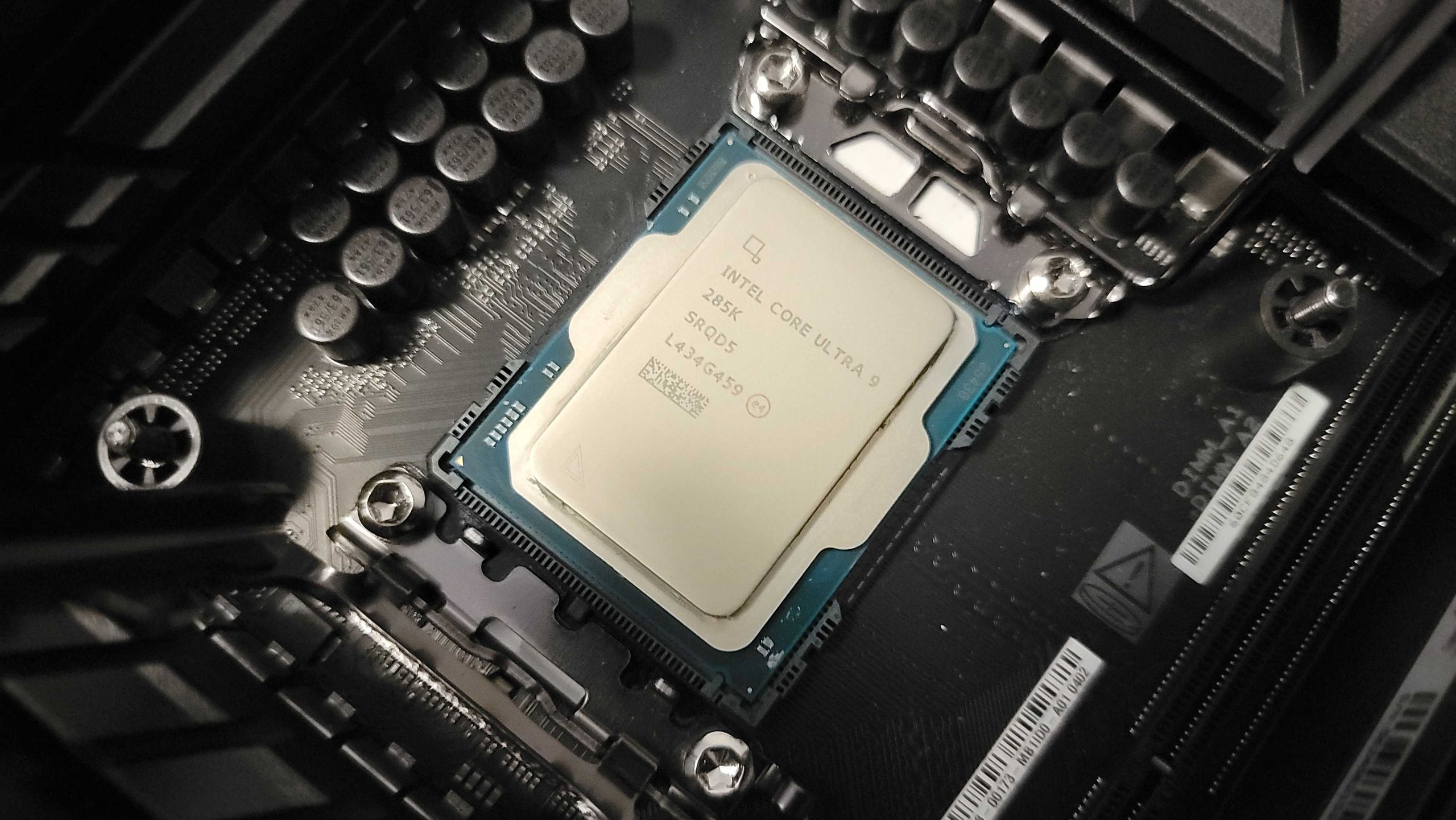
Intel Core Ultra 9 works on Linux if you were worrying about that?
I appreciate the info. That's good to know. I've seen that some Dell models even ship with Linux (as an option), but those had Ultra 5 or Ultra 7. I didn't see an Ultra 9 with Linux directly from that manufacturer (which of course, doesn't mean it can't be done).

I might convert my newer laptop to Linux at some point, but for now, I plan on keeping it as VMs, to check out various distros, reacquaint myself with the command line and dedicating my other laptop as a bare metal Linux machine.
 
The HP Pavilion dv4 can definitely still put in some solid work. Swapping the old HDD for an SSD will give you a huge boost in overall responsiveness — honestly, sometimes even more noticeable than adding a couple extra gigs of RAM. For learning, running a few VMs, and doing command-line tasks, that setup will be more than enough. Plus, it’s a great way to breathe new life into older hardware without spending much.
Most definitely. I'm going to start looking for solid-state drives that are compatible with the model I have. I'm looking forward to making it all work. It should be a fun little project!


Follow Linux.org

Staff online

Members online


Top