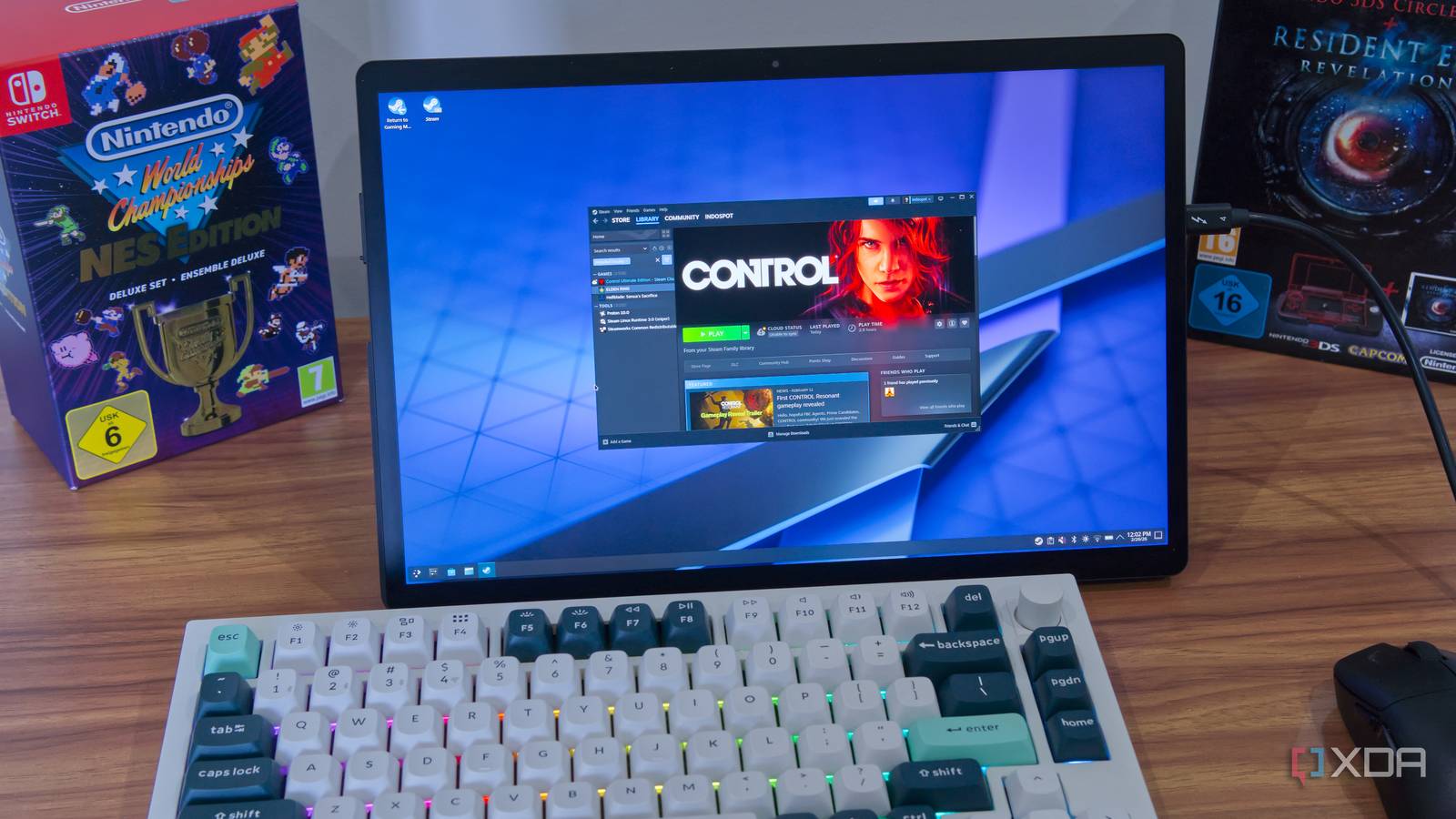
SteamOS is literally Linux — so why can't we install it on a regular PC?

roshhellwett

New Member
Joined
Apr 21, 2026
Messages
6
Reaction score
7
Credits
68
Okay so this has been bugging me for a while and I figured this is the right place to ask.

SteamOS is basically just Arch Linux under the hood with KDE Plasma, right? Valve built it specifically for the Steam Deck — and it works really well on that hardware. But here's what I don't get: if it's Linux, why isn't there a proper installable version of SteamOS 3 (Holo) for regular desktop PCs and laptops?

I know Valve released a desktop image a while back but it's unofficial, barely documented, and they straight up say it's not meant for general use. Meanwhile, the Steam Deck ships with what is arguably one of the most polished gaming-focused Linux distros ever made — and we just... can't use it properly on our own machines?

A few things I'm curious about:
  • Is it a hardware lock-in thing? Like is SteamOS too tightly optimized for the Deck's AMD APU to run well on other hardware?
  • Is Valve intentionally keeping it Deck-exclusive to push hardware sales?
  • Or is it just a maintenance/support nightmare to make it work across thousands of different PC configs?

For what it's worth, distros like ChimeraOS and Bazzite are already doing exactly this — bringing a SteamOS-like experience to desktop PCs — and they're honestly impressive. So clearly it's possible.

Would love to hear from anyone who's tried running SteamOS on a regular PC or has thoughts on why Valve hasn't made it an official thing. Is there even demand for it, or are we all just happy with Bazzite at this point?


Google tells me that you might be interested in HoloISO.
 
SteamOS is basically just Arch Linux under the hood with KDE Plasma, right? Valve built it specifically for the Steam Deck — and it works really well on that hardware. But here's what I don't get: if it's Linux, why isn't there a proper installable version of SteamOS 3 (Holo) for regular desktop PCs and laptops?
Seem it's possible.
Looks like they downloaded it from here as in what they are using.
 
Yeah, there's an image file. a .iso.bz. It gave no details about architecture, so I didn't dig deeper.

Now that I look, it'd be x86_64 (I'm pretty sure). I was this many days old when I learned that Steam decks aren't ARM64-based.
 
I've read on various forums of people running Steam OS on their desktop PCs. I gave it a quick search and it seems to work, it's just not recommended or supported by Valve. They may just not want to deal with the tech support and whatnot.

I may just try installing it on my distro hopping computer when I get bored of Slackware.
 
Okay so this has been bugging me for a while and I figured this is the right place to ask.

SteamOS is basically just Arch Linux under the hood with KDE Plasma, right? Valve built it specifically for the Steam Deck — and it works really well on that hardware. But here's what I don't get: if it's Linux, why isn't there a proper installable version of SteamOS 3 (Holo) for regular desktop PCs and laptops?

I know Valve released a desktop image a while back but it's unofficial, barely documented, and they straight up say it's not meant for general use. Meanwhile, the Steam Deck ships with what is arguably one of the most polished gaming-focused Linux distros ever made — and we just... can't use it properly on our own machines?

A few things I'm curious about:
  • Is it a hardware lock-in thing? Like is SteamOS too tightly optimized for the Deck's AMD APU to run well on other hardware?
  • Is Valve intentionally keeping it Deck-exclusive to push hardware sales?
  • Or is it just a maintenance/support nightmare to make it work across thousands of different PC configs?

For what it's worth, distros like ChimeraOS and Bazzite are already doing exactly this — bringing a SteamOS-like experience to desktop PCs — and they're honestly impressive. So clearly it's possible.

Would love to hear from anyone who's tried running SteamOS on a regular PC or has thoughts on why Valve hasn't made it an official thing. Is there even demand for it, or are we all just happy with Bazzite at this point?
a little confused. could you tell me what a "regular desktop pc and laptop" is?

I am not aware of a "irregular" one. If you are actually referring to Windows then that does not make it a regular anything. Winows is just the operating system. If that is what you mean then while in this forum please correct your terminology.
 
Last edited by a moderator:
I was able to install SteamOS on my system a while back without any issues. All you have to do is ensure you install the appropriate drivers required to support your CPU/GPU architecture and be willing to manage any quirks you might run into yourself.

Being on an Nvidia system, post GPU driver installation and module configuration the system ran as expected.
 
For what it's worth, distros like ChimeraOS and Bazzite are already doing exactly this — bringing a SteamOS-like experience to desktop PCs — and they're honestly impressive. So clearly it's possible.
What do you have against ChimeraOS or Bazzite, if they give a similar experience to SteamOS?
 

so why can't we install it on a regular PC?​

Because portable devices usually have ARM CPUs, meaning a whole new architecture. You need a PC with ARM CPU for that to work.
 
Valve did a lot development for Steam on Linux, it's more than "Arch with KDE" beneath. There is Gamescope (windowing manager; not KDE default), Steam kernel (colour management patches; kernel available via CachyOS) and more. I don't know much about it, but it seems clear to me they customise and patch a lot of the Linux default to achieve best gaming experience. Gaming has a different focus to audiovisuals than, say, videography/photography/CAD/office work. If you consider that, it might be easier to get why they have no business in supporting it in default Linux for a huge variety of hardware/distros with respective own patching.

You can still use it and tinker your installation for it to the best of your and wider community knowledge. I once saw a video on youtube going over the public statistics they share about how the Steam userbase is structured tech-wise. I'm sure it plays a role in for how fast they phase out features, introduce new ones, etc. It's in their own interest to analyse it thoroughly, and pretty cool what all they do share.
 
I said "usually" on purpose. IDC about a modified Arch when I have one modified on my PC, so I didn't bother to research it.
But this article provides a different viewpoint on the matter. IDK if it works as described or not. If you're an enthusiast, you can try it:


I'd be interested in exactly what folks are defining as a Steam OS-like experience tbh. Like, are there any advantages outside of gaming performance that Steam OS offers (rhetorical).

I've used Arch Linux for years, I bulit my wife, and childrens systems using vanilla arch and aid my Father in Law on his Manjaro experience if ever he needs. All of our systems run AMD/NVIDIA builds and my father runs AMD/AMD and we all game rather extensively. It's a family pass time.

I honestly struggle to understand the point of installing SteamOS at all. Once a user installs the appropriate drivers for their CPU/GPU, installs gamescope, mangohud, steam, Custom Proton i.e. proton-ge or catchy proton for funzies; NVIDIA users ensuring they enable the appropriate modules, then what else would one need to gain that native SteamOS like experience aside of a skinned KDE.

My Steam library consists of well over 600 games between our entire steam family and I've never had an issue playing anything that could be played on Steam OS. So I guess I just fail to understand why one would want SteamOS over a simple Arch Linux install in the first place.

It's a topic I'll never really understand, but then again, I don't really comprehend the point of installing any derivative distributions in general aside of convenience of a "plug and play" experience as they so call it.

It's an odd topic imho; but I suppose, different strokes for different folks.


Follow Linux.org

Members online


Top