BlackwolfOz
New Member
Linux Kodachi V9.01 Released — It’s Back!
Hey folks
Just a quick heads-up for anyone who’s been following Linux Kodachi over the years — after nearly two years of silence, it’s officially been re-spun and revived by Warith!
That means it’s now available again for everyone to download.
Download / Info: https://www.kodachi.cloud/wiki/bina/index.html
Kodachi remains a hardened, privacy-focused Debian-based distro built for users who want strong anonymity without wrestling with complex setups.
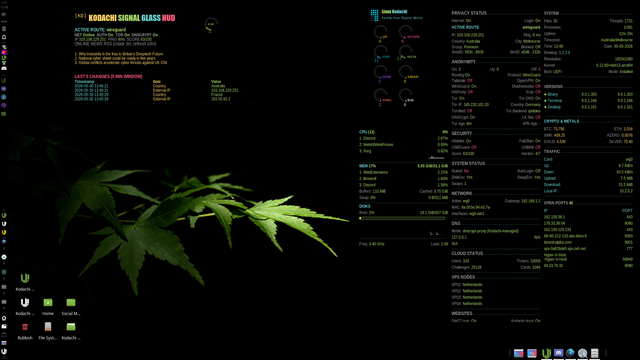
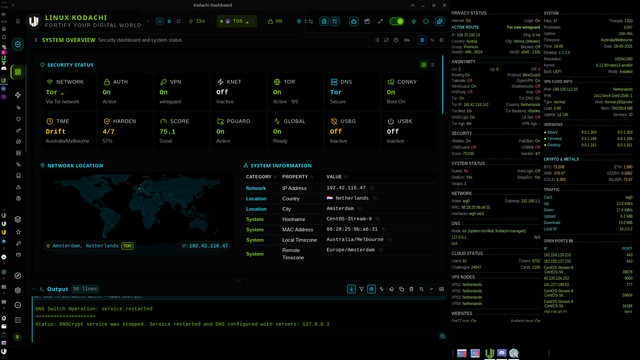
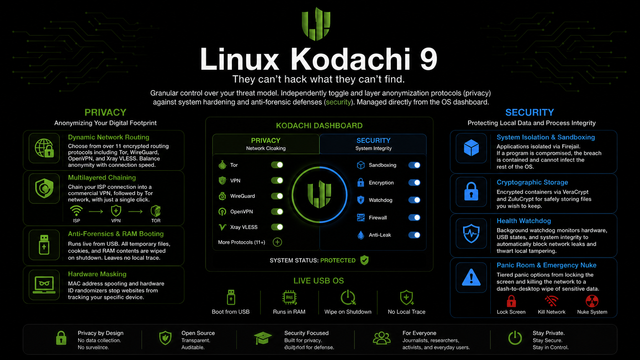
It ships with a fully pre-configured security stack: failover VPN routing, Tor integration, DNSCrypt, leak-prevention mechanisms, and anti-forensic protections.
The goal is simple — secure out-of-the-box computing with enough depth for power users who want to dig deeper.
If you’ve been waiting for Kodachi to return, it’s back.
Hey folks
Just a quick heads-up for anyone who’s been following Linux Kodachi over the years — after nearly two years of silence, it’s officially been re-spun and revived by Warith!
That means it’s now available again for everyone to download.
Download / Info: https://www.kodachi.cloud/wiki/bina/index.html
Kodachi remains a hardened, privacy-focused Debian-based distro built for users who want strong anonymity without wrestling with complex setups.
It ships with a fully pre-configured security stack: failover VPN routing, Tor integration, DNSCrypt, leak-prevention mechanisms, and anti-forensic protections.
The goal is simple — secure out-of-the-box computing with enough depth for power users who want to dig deeper.
If you’ve been waiting for Kodachi to return, it’s back.