Switching to Linux from Win11

print-driver-brlaser

This driver has been reported to work with these printers:

  • Brother DCP-1510
  • Brother DCP-1602
  • Brother DCP-7030
  • Brother DCP-7040
  • Brother DCP-7055
  • Brother DCP-7055W
  • Brother DCP-7060D
  • Brother DCP-7065DN
  • Brother DCP-7080
  • Brother DCP-L2500D
  • Brother DCP-L2540DW
  • Brother HL-1110 series
  • Brother HL-1200 series
  • Brother HL-L2300D series
  • Brother HL-L2320D series
  • Brother HL-L2340D series
  • Brother HL-L2360D series
  • Brother MFC-1910W
  • Brother MFC-7240
  • Brother MFC-7360N
  • Brother MFC-7365DN
  • Brother MFC-7840W
  • Brother MFC-L2710DW
  • Lenovo M7605D
This package contains the CUPS filter driver for the supported laser printers.


Before I did all the bios updates I was on version F24 from 2018. Yeah I never updated it ever. Old school was not ever doing so unless it fixed a known issue you were having. In the notes for several of the newest updates were fixes for TPM.
Same case here, I had old BIOS, after update fTPM appeared in devmgmt.msc under software components or something like that.

There is a saying "if ain't broke don't fix it" which I followed and avoided to update BIOS, but that saying sucks obviously.

Anyhow im working on a tough book laptop to experiment with all the software I regularly use to really see if I can live with Linux and kiss Microsoft goodbye
It will soon be 2 years since I switched to Linux and said good bye to Windows.
From my XP I needed some 3 months to fully adapt

And software, sure you can live with it, the fact that not all Windows software exists in Linux needs to be accepted and dealt with, there are alternatives for almost all Windows programs, but they're different and often not "shiny".

What's best about Linux software is that it's free and open source, so you never need to worry about whether some software comes with spyware, but you're never sure with Windows software since it's closed source, you don't know what's inside.
This is something that's special about Linux and worth dumping Windows, this will never change in Windows world.
 
but they're different and often not "shiny".

This is the truth.

One other thing to consider is that software for Linux tends to just do one thing. That's the "UNIX way" (and some folks are quite adamant about this). The UNIX way is to do one thing and do it well.

This is not as true as it once was. We now have systemd in most popular distros and that thing tries to do everything, much like the pundits complained about when systemd was first being considered.

Anyhow, as the software is doing one thing and doing it well, they leave it up to your desktop environment (and window manager) to control the style of the application. There are some benefits to that, chief among them being consistency. Also, they tend to not break 'userland'. As an aside, Linus himself is quite unhappy if you break userland with your submitted kernel code. He can be both verbose and terse, depending on his mood. Breaking userland is a huge no-no in the kernel.
 
This is not as true as it once was. We now have systemd in most popular distros and that thing tries to do everything, much like the pundits complained about when systemd was first being considered.
Yeah it's Zawinski's Law in action and Linux is not immune to it.
It may be less present in Linux because of less commercial development.

I like to compare Linux to a wild fish, have you ever tried to order a wild fish in restaurant?
Wild fish can be visually recognized compared to farmed fish, it has bigger gills for one thing and ofc. it's more expensive and you're lucky if they have it.

What does wild fish have to do with Linux?
It's made and developed in the wild, nobody controls your use of software and nobody controls how software is made, it's wild.

Windows software however is farmed, there is someone at the top dictating everything, there is Windows API that's used to made literary all software for Windows, there are even written standards on UI component sizes and positions. (e.g. Windows dialogs) etc.

No such thing exists in Linux, so it's wild, Linux software has bigger gills and swims without control or restrictions.
Price? priceless.
 
This is the truth.

One other thing to consider is that software for Linux tends to just do one thing. That's the "UNIX way" (and some folks are quite adamant about this). The UNIX way is to do one thing and do it well.

This is not as true as it once was. We now have systemd in most popular distros and that thing tries to do everything, much like the pundits complained about when systemd was first being considered.

Anyhow, as the software is doing one thing and doing it well, they leave it up to your desktop environment (and window manager) to control the style of the application. There are some benefits to that, chief among them being consistency. Also, they tend to not break 'userland'. As an aside, Linus himself is quite unhappy if you break userland with your submitted kernel code. He can be both verbose and terse, depending on his mood. Breaking userland is a huge no-no in the kernel.
The way in which a lot of distributions use systemd in their releases can make it look like systemd is a sort of monolithic software behemoth. It can look like it's overtaken what is conceived of as the UNIX approach which uses lots of small applications, each being capable of delimited or discrete tasks which can be combined for an endless number of complex operations and functioning. Because there are so many systemd units running on such releases, it may just looks like systemd has overwhelmed the particular distro.

However, I do think this perception is in part an illusion, and is a function of the way in which distros have come to use systemd in the comprehensive way that they have with their use of so many units. The clue as to the UNIX derived aspects of systemd is in the term "units". Systemd is composed of units, often over a hundred in a release. (As an aside, to check one's systemd system can run: systemctl list-units and at the end of the output it shows the number of loaded units. On this debian machine there are 148.) The units are not unlike the discrete functions found in UNIX, but they are not used in quite the same way that UNIX uses a lot of its apps, for example through piping.

The chief developer of systemd has a page which describes some myths about systemd, including the myth that "systemd is not UNIX". It's here: http://0pointer.de/blog/projects/the-biggest-myths.html. Briefly, he makes the following points:

systemd includes no UNIX code, but it actually follows UNIX philosophy in fundamental ways;
in systemd "everything is a file";
systemd is based on built-in terminal support;
systemd is a suite of integrated tools that each have their individual purposes but when used together are more than just the sum of the parts;
systemd is actually more like BSD which is actually closer to original UNIX than linux.

Ultimately, the "freedom to choose" aspect which is fundamental in FOSS is available with systemd. One can choose the units they wish to use, but there needs to be some attention to interdependencies, as is always the case. One can use systemd as the init system, but then use other applications for other functions. As mentioned, lots of distros choose to use systemd units for lots of other functions, but if one is building up their own system, it doesn't need to be that way. Boutique systems can pick and choose just what they like among upstream applications and systemd units.

What systemd offers, apart from the units themselves that run functions and applications, is a set of common methods for managing the units, the configurations and the creation of new units. The convenience of that approach has doubtless been attractive to distros, apart from the fact that systemd actually works.
 
Last edited:
It may be less present in Linux because of less commercial development.

We still have some stalwarts that do one thing and do it well.

I believe it is from before your time, so you will have missed the uproar surrounding the sudden and rapid inclusion of systemd in mainstream distros. The project itself was so abhorrent to some people that there are still distros out there without systemd -- and that's pretty much their only reason for existing.

Anyhow, many of the people who complained about systemd were wildly off the mark and just didn't understand it. But, there was a subset of users who were upset that it did not follow the UNIX way (a more descriptive link is the UNIX Philosophy).

These people were accused of the 'Slippery Slope Fallacy', as it was often noted that systemd would eventually expand to include the proverbial kitchen sink. After all, it was already more than just an 'init system', of which we already had (and used) myriad choices.

From the second link above:

Make each program do one thing well. To do a new job, build afresh rather than complicate old programs by adding new "features".

That UNIX philosophy was formalized back in the latter portion of the 1970s. That was some time after UNIX was released.

Frankly, and I'm one of those people who doesn't mind systemd, those people were right. It has absorbed everything from audio to the network. It's all a giant monolithic application that does many things. If systemd breaks, the whole system is going to be broken. There were also a bunch of people who just hated Lennart Poettering. It seems that most of that hate came from 'PulseAudio'. If you do view said link, you'll notice that it's almost equally about 'controversies'.

The roots of systemd stem back to about 2011. By 2015, most major distros had adopted systemd, or were in the process of doing so. Fedora was a very early adopter. At the time, Poettering worked for Red Hat. His place of employment is a good indicator as to why Fedora was so quick to adopt systemd.

As I realize we have some folks who haven't been with Linux that long, I've provided some links that may be worth viewing. There's a whole lot of history behind us, and it sometimes helps to understand that history so that you can understand the positions taken by some folks.

I, for one, think that our shared history is important. It helps to explain where we are and why we're here, but it can also explain why people believe the things they believe. Understanding their viewpoints is the first step necessary for honest discourse.

 
systemd includes no UNIX code, but it actually follows UNIX philosophy in fundamental ways;
in systemd "everything is a file";
systemd is based on built-in terminal support;
systemd is a suite of integrated tools that each have their individual purposes but when used together are more than just the sum of the parts;
system is actually more like BSD which is actually closer to original UNIX than linux.

Oh, I more or less agree with all of that. But, it has expanded to include a bunch of other stuff and it's no longer 'just another init system'. As you mention, it's very much a suite of tools.

I have been more or less a fan since day one. Well, as soon as I actually spent some time researching what it was (and ignoring the angry Slashdot posts). Frankly, I find systemd does what it says on the tin and does it well enough for me. It meant learning some new commands, some of them quite useful.

But, I'm not quite sure that I understand the last bit of what I quoted. I've not used BSD in a while, but I can't think of anything similar in BSD-land. I believe BSD still uses rc init, but I could be mistaken.

Also, I believe that distro authors don't need to use the entirety of systemd, but all of those that I can think of (that do use systemd) use the entirety of it. I believe you can just use parts of it as separate components.

A good page to look at everything systemd now does would be this one:


And again, to be clear, I'm perfectly happy with systemd. For all the complaints of functionality lost, there are other ways to include that data. My first exposure to it was systemd-analyze blame. I've pretty much been a fan since then. I'm not afraid to learn something new. I'm not so entrenched in my ways that I'm bothered by change. Sure, I'm no longer the equivalent of a bleeding-edge system. I'm more of a LTS system. But I still don't mind change.
 
I've had time to play with Ubuntu on the ToughBook. I have to say so far I am impressed. I have to tinker a bit more so far nearly everything I tried to do that I would do daily works. I was a bit concerned about printing and scanning. I was over the moon when my Brother DCP-7065DN was discovered and drivers Automatically installed on my WiFi and same in the Document Scanner app. My partner's Mac mini can't even do that!

The one thing that I had issue with was PLex Media server. I couldn't spin up to server app even though it was a snap installed app. I cold be I already have a server attached to my plex account online. I have to figure that out later.
 
I got the plex media server to run yesterday. At first I tried to add some media I created to it's libraries that were in the music and movies directories inside the home folder and plex couldn't seem to see and index them. I figured that It was a file permissions issue. I will add that the laptop I'm using for testing has only had one SSD. When I actually turn my computer over I'll have an M.2 drive for the system and 2 spinning drives of different sizes for data and the media Plex hosts.

My Question is in the current situation with one disk and multiple drives in the future what is the best way to create or place those directories? on the laptop I created a "Plex" folder inside the Media folder, copied files there and used terminal commands to give rwx permissions to all users of those directories and subdirectories. Plex then was able to see those directories so file permissions was the reason. I am just not sure my solution was the best one. I hope I wasn't mucking up any system directories by using the Media folder. Is there a better way to do it?
 
@Tacomike73
First you have to figure out how is Plex running, does it run under an account that's not your user account?
Then you need to figure out FS permissions of location on your drive where you keep media files,
if it's owned by your account but Plex runs under different account then you probably need to add yourself to Plex group.

I don't have Plex to test so I'm not sure what steps to give you to follow, but here is a guide from Plex support:
 
Okay, So that means I need to find out how it's running. I installed it as a snap package from the app store. I am sure it's not running as my user account on the machine since it wasn't able to access files in my home directory.

Google searching says to use the ps aux command to see what accounts are running a program. I'll have to try that out.
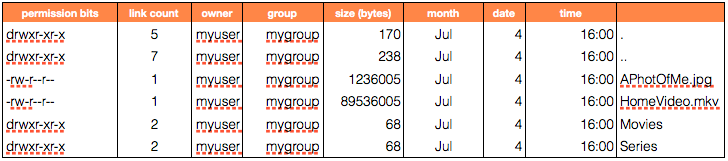
File permissions is a much more granular thing than in windows and that is true for a lot of systems I've worked with in the past like Novell was.
 
In the guide, jump to section "How permissions affect Plex Media Server"
It says Plex runs under restricted account plex. and it also says to avoid home directory.

You can run htop to to list usernames, it's more friendly than ps aux command, first install htop with sudo apt install htop then run htop in terminal while plex is running, then find it in htop output.

This is only to confirm user is plex

Next the section says this user needs RW permissions for default log and metadata directory /var/lib/plexmediaserver
Next it needs RW permissions for your media directory where you keep media files, this is arbitrary and should be outside your home directory.

First set permissions for /var/lib/plexmediaserver with:
Bash:
sudo chown plex:plex /var/lib/plexmediaserver
sudo chmod ug=rwx,o= /var/lib/plexmediaserver

Then repeat this for your media directory, first create it outside homedir with:
Bash:
sudo mkdir /plexmedia

Then set permissions:
Bash:
sudo chown plex:plex /plexmedia
sudo chmod ug=rwx,o=rw /plexmedia

Next copy your media files into /plexmedia.
And finally restart plex server to test.
 
In the guide, jump to section "How permissions affect Plex Media Server"
It says Plex runs under restricted account plex. and it also says to avoid home directory.

You can run htop to to list usernames, it's more friendly than ps aux command, first install htop with sudo apt install htop then run htop in terminal while plex is running, then find it in htop output.

This is only to confirm user is plex

Next the section says this user needs RW permissions for default log and metadata directory /var/lib/plexmediaserver
Next it needs RW permissions for your media directory where you keep media files, this is arbitrary and should be outside your home directory.

First set permissions for /var/lib/plexmediaserver with:
Bash:
sudo chown plex:plex /var/lib/plexmediaserver
sudo chmod ug=rwx,o= /var/lib/plexmediaserver

Then repeat this for your media directory, first create it outside homedir with:
Bash:
sudo mkdir /plexmedia

Then set permissions:
Bash:
sudo chown plex:plex /plexmedia
sudo chmod ug=rwx,o=rw /plexmedia

Next copy your media files into /plexmedia.
And finally restart plex server to test.
WOW Thanks, That is Awesome! I was starting to read through that and absorb the information in the guide so I could figure it out later. You laid out all the commands for me.
That Plex guide is defiantly helpful in understanding how it all works, it's just a bit dry, However not as bad as the Linux file system structure document I was reading last evening.
 
My system is set up different.
I don't have an directory /var/lib/plexmediaserver.
when I ran htop Root is the user running plexmediaserver so that's not what we expected.

I found Plex here: /root/snap/plexmediaserver

Update: decided to uninstall the snap install of Plex and instead follow the instructions Here https://support.plex.tv/articles/200288586-installation/

after installed as the .deb package Plex runs as the plex user. I learned a lesson here the snap installer though easier is not always better then a .deb
 
Last edited:
I been learning a lot here with experimenting on bare metal with Ubuntu. I like how the interface is clean and lean with no ads and silly things. Though I've not used it much Libre Office looks and feels like MS office but not one of the new versions more like an version from the 2010's. I feel fine with that.

I just been down a Youtube rabbit hole on linux distros. Many are Touting Mint and Mint- Cinnamon or KDE vs Gnome. Is there anything compelling I should try? I was thinks of running some live demos of Mint.

The other Queston I don't know is with Ubuntu when the next LTS comes out what is the upgrade path like? does it just update in place or do I have to do a reinstall?

Edit you can update with out a full reinstall,... nice.
 
Last edited:
I just been down a Youtube rabbit hole
Whilst playing, try "freetube" from the software repository, its a back door YouTube app that removes most adverts
 
Several ways to install MakeMKV on the Ubuntu derivatives linked below. I use the ppa method, 'handbrake' can be used to transcode .mkv files to .mp4 for compact storage.

 
Several ways to install MakeMKV on the Ubuntu derivatives linked below. I use the ppa method, 'handbrake' can be used to transcode .mkv files to .mp4 for compact storage.

Yep, I found all those things the other day. I found Make Mkv in the app store thing as a deb package and I thing MakeMKV was a snap. I already was doing .mp4 container files with the HEVC codec on Windows for compact and high quality videos. I just needed to prove that Linux could do all of it the same.
I want to try Linux mint for a minute but I think Ubuntu is probably going to make the cut because of the LTS versions and lots of support. Only thing really holding back the switch is re-organzing my files better and getting a bigger back up drive to back up all my data.
 
@Tacomike73 when you are sure this is solved, and the solution persists, you can mark it as such by going to your first post, and do as follows

Near bottom left of the post click Edit - (No Prefix) - Solved

Enjoy your Linux.

Wizard


Follow Linux.org


Top