Complete noob with obsessive tendencies


I have Mint Xfce installed a very inexpensive laptop with 64GB of storage, and 4 GB of RAM. Runs very well
I've got it running on an HP Stream. It was given to me from an estate and I never ran it with the stock OS. It has 4GB ram, an Atom processor and the primary storage is a soldered in 32GB SD card. Everything I've read indicates they kinda sucked, I can only imagine.

But mine is purple (!) with stark white keys with large black letters, no backlighting needed. Oh, and a pretty good track pad and an SD expansion slot. And it runs Mint Xfce 22.3 just fine with absurdly good battery life. I do have to pay attention to keep the system drive groomed, like keeping only one previous kernel, etc. If it has a fan I can't hear it and it doesn't get hot on my lap in the rocker. Great for watching...movies. Or, visiting here!
(derp)
Point is this machine would long ago have been tossed, as I suspect most were after reading the reviews. That's too bad because it's a cool, lightweight little machine and I'm happy to have it.
 
I've got it running on an HP Stream. It was given to me from an estate and I never ran it with the stock OS. It has 4GB ram, an Atom processor and the primary storage is a soldered in 32GB SD card. Everything I've read indicates they kinda sucked, I can only imagine.

But mine is purple (!) with stark white keys with large black letters, no backlighting needed. Oh, and a pretty good track pad and an SD expansion slot. And it runs Mint Xfce 22.3 just fine with absurdly good battery life. I do have to pay attention to keep the system drive groomed, like keeping only one previous kernel, etc. If it has a fan I can't hear it and it doesn't get hot on my lap in the rocker. Great for watching...movies. Or, visiting here!
(derp)
Point is this machine would long ago have been tossed, as I suspect most were after reading the reviews. That's too bad because it's a cool, lightweight little machine and I'm happy to have it.

I have an HP Stream 11 (11 inch screen, 32 GB emmc storage, 4 GB RAM, Celeron N3060). I f not for the fact that the main battery is shot, it would be my go-to machine for portability. As it is, I only use it for score keeping on family card bight - which is the only time I need portability anyway, so here we are. Mine's light blue, not purple. The resources might seem limited, but for Tiny Core Linux the specs are almost "extravagant", even with LibreOffice running.

This machine was on its way to being tossed but my niece thought of me just n time - see my sig re. keeping old hardware out of the landfill.

I did put a new CMOS battery in it - the cheap bastards had used a CR2016 instead of a CR2032, so it only lasted half as long. Turns out the CR2032 could be made to fit. Also, sadly, the Micro SD does not appear to be bootable, though it can boot from USB. So far, the emmc device is holding up ok despite having had MS Windows on it in its previous life.
 
I've got it running on an HP Stream.

Wow! They gave yours a name? Mine only got a description.

HP - 14" Laptop - Intel Celeron - 4GB Memory - 64GB eMMC - Indigo Blue


At least I got twice as much storage... My very first PC had a 4 GB HDD. I remember when I upgraded to 8 GB. I could use a few less floppy diskettes after that!

I never ran it with the stock OS.
Um... If by stock OS you mean Winblows... Er... Well why would you do that?

But mine is purple (!) with stark white keys with large black letters, no backlighting needed.

Those cell phones for senior citizens comes to mind,,, the ones with the giant number pad so they see the digits...

Or a Fisher Price Toy... 'My Child's First Laptop'
 
Hi & Welcome to Linux.org. :)
I wish you the best on your Linux journey.

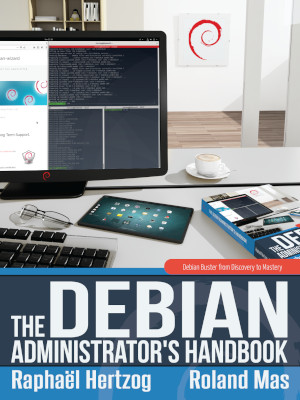
The Debian Administrators Handbook is a real gem if you have the time to read.

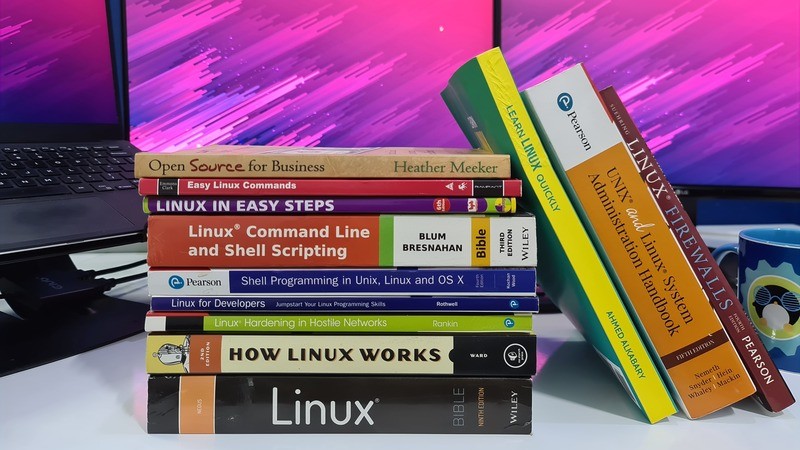
Other resources:
 
My very first PC had a 4 GB HDD. I remember when I upgraded to 8 GB. I could use a few less floppy diskettes after that!
My first PC compatible had a Kalok brand 40 MB hard drive. That was the last hard drive I ever saw that had an actual stepper motor to position the heads - made a quaint little sound during boot up of MS DOS. When I upgraded to a 120 MB drive, I blew the timing of my purchase - within a month, I could have got a drive with three times the capacity for the same price because some advance in storage tech had finally made it to market.
 
Yeah I said Atom, had an even older Synology box on my mind at the moment. Sounds like I have the same machine only in a different shade. I've been lucky so far to have no battery issues of any kind, or with the emmc. I think the saving grace was that the guy that had it before me barely used it.
 
My first PC compatible had a Kalok brand 40 MB hard drive. That was the last hard drive I ever saw that had an actual stepper motor to position the heads - made a quaint little sound during boot up of MS DOS. When I upgraded to a 120 MB drive, I blew the timing of my purchase - within a month, I could have got a drive with three times the capacity for the same price because some advance in storage tech had finally made it to market.
When I think of stepper motors, I think of MiniScream! (MiniScribe)

Yikes. Anyway, from the time frame you describe I'm remembering the introduction of RLL encoding (run length limited) when the current standard was MFM (modified frequency modulation). Specifically I recall the Seagate ST-225 20MB being briefly upstaged by the ST-238 30MB. The two drives were more or less identical mechanically, but the secret sauce was improved platters/heads along with a RLL controller. Those of us in the trenches thought this was sketchy, and for a neat bar trick would stick an MFM drive on an RLL controller and low level it as an RLL drive for +30% more capacity. Nobody I knew ever embraced RLL, as ESDI (enhanced small disk interface) came along soon enough. And EISA, but that's a different story.

-g=c800:5
 

Attachments

  • IMG_0922.JPG
    IMG_0922.JPG
    1.9 MB · Views: 5
I think the saving grace was that the guy that had it before me barely used it.
The previous owner of mine, my niece, had apparently tried to do some kind of an update (probably couldn't stop it from updating) and it ran out of space part way through - couldn't complete the update, but the OS (some form of MS Windows) wouldn't give up on it either, so every time it booted up Windows, it wanted to go back into the update. Once it was mine, I solved -that- problem handily!

I think my niece liked the machine pretty well, too, before Windows did its "Windows thing" - She dropped by my brother's house while we were playing cards the other day and mentioned what a nice job it was doing of keeping the score sheet ("Hand and Foot" doesn't -require- a spreadsheet to keep score, but it's a sloppy mess to do it on paper.)
 
from the time frame you describe I'm remembering the introduction of RLL encoding
This seemed late in the game for a 3.5" drive to have a stepper motor and I'm pretty sure RLL had been around since before 3.5" drives became common. I don't remember the exact year - that's shrouded in the mists of passing years. It was back during that era when you couldn't get a new PC for under a thousand or eleven hundred dollars - every year it was a nicer machine, but if you didn't have that much money, you were -not- gonna get a PC compatible.


Follow Linux.org

Members online


Top