Anybody here into MMORPGs?

...that mean you went off the rails offtop'ing. Maybe read thread title next time.

BTW, I play games on Linux, but none of them are Massive Multiplier Online RPGs, so no point listing them here.
Even online RPG that I sometimes play (Diablo IV) is not a MMO, so doesn't belong here.

You listed (among other things) Diablo 2 in MMORPG topic... on well.
I disagree about Diablo IV. I agree that Diablo II does not belong in an MMORPG discussion merely because it has online multiplayer. Diablo II is fundamentally a session-based action RPG: somebody creates a limited game instance, a small number of players join it, and that particular world disappears when the session ends.

Diablo IV is built very differently. Blizzard officially calls it an action RPG, but I am not arguing about the marketing label printed on the box. I am talking about how the game actually works.

Diablo IV has a continuously connected shared open world where other players are automatically placed into your world without anyone hosting a traditional multiplayer session. You encounter strangers in towns and outdoor zones, fight beside them during public events and Helltides, and gather with them for world bosses. The game also has clans, parties, trading, seasonal characters and centrally stored progression. It requires both a Battle.net account and an internet connection, even when you intend to play alone. Blizzard itself describes Sanctuary as an open world.

That is much closer to MMO design than traditional Diablo multiplayer. The world uses multiple instances or shards so that only a limited number of players appear together at one time, while dungeons and certain story areas are separately instanced. However, sharding does not automatically stop something from being an MMO. Full MMORPGs such as World of Warcraft also use layers, shards and private dungeon instances. “Massively multiplayer” does not mean every player must exist on one physical server or appear on the same screen simultaneously.

The strongest argument against calling Diablo IV an MMO is the scale. Its individual world shards contain relatively few visible players, grouping is generally limited to four people, most content remains solo-friendly, and its character building and combat are still designed primarily as an action RPG. It also lacks some traditional MMORPG systems, such as large social hubs containing hundreds of visible players, conventional MMO professions and large persistent guild-controlled worlds.

That is why I would describe Diablo IV as an MMO-lite, shared-world ARPG or an action RPG built with MMO-style infrastructure. But saying it has no place in an MMORPG discussion at all is too absolute. It has a persistent online service, shared public zones, automatic encounters with strangers, public events, world bosses, clans, social systems, seasons and server-controlled progression. Those are major MMO characteristics, not merely ordinary online co-op.

I called Diablo IV an MMO when it released, and I still consider it one at the edge of the definition. It may not be a traditional full-scale MMORPG like World of Warcraft, but it is about as close as an action RPG can get to being an MMO without Blizzard officially using the label.

So yes, Diablo II was a poor example for an MMORPG thread. Diablo IV is a much more defensible example, and dismissing it simply because Blizzard calls it an “action RPG” ignores how the game and its servers are actually structured.

I made this aroudn when D4 came out that why is so bad.

so we can debate if it do or do not belong mmo.


@Mineru :-

Ah, Tolkien's somewhat like the British "Marmite" (or the Aussie equivalent, "Vegemite" - a yeast-based spread for sandwiches or on toast). As the commonly-held parlance would have it, you either love it, or you hate it.

There's no middle ground. And Tolkien's writing is rather similar; it either appeals to you.....or else you simply don't understand it / can't see the point in it...

Those who are "rooted" very firmly in the real, day-to-day world frequently don't see that there's any point in fantasy fiction and/or associated pursuits. Most who do like such stuff often fall in the higher IQ percentile, and tend to have more vivid imaginations...

(shrug...)

That's not denigrating anyone by saying so. Everybody's different.....life would be SO boring & predictable if we were all the same!


Mike. ;)

Hehehe, I love fantasy as well as fiction, so I will definitely give Tolkien's writings a shot eventually, thank you for the recommendation! :D
 
i'm desperately looking for a game to play. totally offline. which is like rpg. but i have to change my way of thinking.

i said in another topic. that i used to play one mmorpg. but i have disliked social networking. it's microtransactions like two people have said already. and it seems to be emphasized more and more. the higher one progresses with a player character. people are always interested. hooking up inside a game. while they all have money. although in the game i used to play. one of my characters belonged to a guild. which contained three members that demonstrated their class all the way through. i didn't have enough materials to construct a weapon. was about 2/3 or 3/4 of the way. but they helped me out. i also couldn't even construct my weapon. but one of the guild officers did that for me too. without further demands. i still feel bad even today i couldn't remain. in that guild and playing that game.

on that same character, but earlier. i joined another guild. because a married couple running it helped me out. while i was on the point of ragequitting. and was afraid of the bosses. so much i couldn't even make substantial career progress. i got helped through at least two stages. learned a wealth of skills. received other benefits. i wanted to be near mature adults playing. but some of them were into "roleplay." i left because the guy and lady married to each other. weren't logging in much anymore. i was feeling increasingly left out.

i desired to help out people in the game. but some of them had chat comportment i couldn't stand. such as "qq" every other time. overuse of emoticons. a guy kept doing the "looking around" semi-animated feature on chat. which was going to drive me away from the game for good. he was able to type faster than anybody else. while i was able to see it.

also the begging for help, for equipment, for money. the game made a poor demonstration to such people. in the last year or so i played. it seems it made a bid to attract teenagers and young adults. with the luxurious looks of the mounts. for much faster mobility around cities and safe zones at least. but they couldn't be used during battles. otherwise the selfishness would have been evident.
 
i'm desperately looking for a game to play. totally offline. which is like rpg. but i have to change my way of thinking.

i said in another topic. that i used to play one mmorpg. but i have disliked social networking. it's microtransactions like two people have said already. and it seems to be emphasized more and more. the higher one progresses with a player character. people are always interested. hooking up inside a game. while they all have money. although in the game i used to play. one of my characters belonged to a guild. which contained three members that demonstrated their class all the way through. i didn't have enough materials to construct a weapon. was about 2/3 or 3/4 of the way. but they helped me out. i also couldn't even construct my weapon. but one of the guild officers did that for me too. without further demands. i still feel bad even today i couldn't remain. in that guild and playing that game.

on that same character, but earlier. i joined another guild. because a married couple running it helped me out. while i was on the point of ragequitting. and was afraid of the bosses. so much i couldn't even make substantial career progress. i got helped through at least two stages. learned a wealth of skills. received other benefits. i wanted to be near mature adults playing. but some of them were into "roleplay." i left because the guy and lady married to each other. weren't logging in much anymore. i was feeling increasingly left out.

i desired to help out people in the game. but some of them had chat comportment i couldn't stand. such as "qq" every other time. overuse of emoticons. a guy kept doing the "looking around" semi-animated feature on chat. which was going to drive me away from the game for good. he was able to type faster than anybody else. while i was able to see it.

also the begging for help, for equipment, for money. the game made a poor demonstration to such people. in the last year or so i played. it seems it made a bid to attract teenagers and young adults. with the luxurious looks of the mounts. for much faster mobility around cities and safe zones at least. but they couldn't be used during battles. otherwise the selfishness would have been evident.
I think this is more of a scale than a choice between two complete opposites. You do not necessarily have to choose between a full MMORPG with hundreds of strangers and a completely isolated single-player game.

It reminds me of the idea of Equivalent Exchange from Fullmetal Alchemist: to gain something, you normally have to give something up. With an MMORPG, you gain a living world, other players, guilds and people who can help you, but you also have to accept the social pressure, begging, immature chat, microtransactions, people showing off and the risk of becoming dependent on people who may suddenly stop logging in. With a completely offline RPG, you escape all of that, but you also lose the spontaneous human interaction and the feeling that somebody else is sharing the world with you.

From what you wrote, it does not sound like you hated every social part of the MMORPG. Some of your strongest memories are about people helping you through bosses, teaching you skills, providing materials and even constructing your weapon without demanding anything in return. That clearly meant something to you. I also do not think you need to continue feeling guilty because you eventually left. They chose to help you because they wanted to, and leaving the game later does not erase the fact that you appreciated it.

The problem seems to be that you wanted a smaller and more mature social group, not the entire MMO social environment. You liked helpful guild members, but not feeling ignored when they stopped playing. You wanted to help people, but not deal with constant begging, strange roleplay, excessive emoticons, “QQ” messages, repetitive chat animations, showing off and people treating the game like a social network. That is understandable. You were looking for cooperation without all the noise surrounding it.

A cooperative RPG may therefore be closer to what you are searching for than either a full MMO or total isolation. You could play with one or two people you actually know while sitting together on Discord, TeamSpeak or whatever you use. That gives you conversation, help and shared experiences without putting you in a world full of random players, guild politics, public chat and people asking for equipment or money.

Even when playing a completely offline game, you can still sit on Discord or TeamSpeak and talk with people. You do not need to be inside the same game to have company. You could play your own RPG while somebody else plays something different, ask for advice when you get stuck and still have normal interaction. It separates the social part from the game, meaning you have more control over both.

I have played a lot of games throughout my life, and I have mostly been a PvE player. I like exploring, fighting enemies and progressing through a story, but I cannot stand it when progression becomes an endless grind. I also agree that microtransactions, premium stores, loot boxes, battle passes and live-service systems have become far too dominant. They often turn progression into something designed around player retention and spending rather than simply making the game enjoyable.

For a fully single-player experience, I would look at games such as The Witcher 3, Cyberpunk 2077, Exiled Kingdoms or Titan Quest. The Witcher 3 is a large story-driven open-world RPG, while Titan Quest is closer to Diablo, with classes, equipment, loot and character builds. I am playing Titan Quest myself right now, and it gives me some of that old Diablo feeling without requiring me to participate in an MMO community.

Baldur’s Gate 3 and Divinity: Original Sin 2 are also worth considering because they can be played alone or cooperatively. That means you can begin by yourself and still have the option of sharing the experience with a small number of people. You are not forced into a large persistent online world just because you occasionally want company.

I do not think you need to completely change the way you think. You may only need to work out how much interaction you actually want. There is a large middle ground between being surrounded by strangers in an MMO and playing alone without speaking to anybody. A smaller cooperative RPG group, or an offline RPG while talking with friends outside the game, may give you the parts you miss without bringing back everything that drove you away.
 
i'm desperately looking for a game to play. totally offline. which is like rpg. but i have to change my way of thinking.

i said in another topic. that i used to play one mmorpg. but i have disliked social networking. it's microtransactions like two people have said already. and it seems to be emphasized more and more. the higher one progresses with a player character. people are always interested. hooking up inside a game. while they all have money. although in the game i used to play. one of my characters belonged to a guild. which contained three members that demonstrated their class all the way through. i didn't have enough materials to construct a weapon. was about 2/3 or 3/4 of the way. but they helped me out. i also couldn't even construct my weapon. but one of the guild officers did that for me too. without further demands. i still feel bad even today i couldn't remain. in that guild and playing that game.

on that same character, but earlier. i joined another guild. because a married couple running it helped me out. while i was on the point of ragequitting. and was afraid of the bosses. so much i couldn't even make substantial career progress. i got helped through at least two stages. learned a wealth of skills. received other benefits. i wanted to be near mature adults playing. but some of them were into "roleplay." i left because the guy and lady married to each other. weren't logging in much anymore. i was feeling increasingly left out.

i desired to help out people in the game. but some of them had chat comportment i couldn't stand. such as "qq" every other time. overuse of emoticons. a guy kept doing the "looking around" semi-animated feature on chat. which was going to drive me away from the game for good. he was able to type faster than anybody else. while i was able to see it.

also the begging for help, for equipment, for money. the game made a poor demonstration to such people. in the last year or so i played. it seems it made a bid to attract teenagers and young adults. with the luxurious looks of the mounts. for much faster mobility around cities and safe zones at least. but they couldn't be used during battles. otherwise the selfishness would have been evident.

Erenshor is an 'Old-School MMORPG' style single-player 'MMORPG' with simulated players (no LLM / AI, plain-old programming) that you can do group content, trade, meet up in the world, join guilds, etc ... all offline:


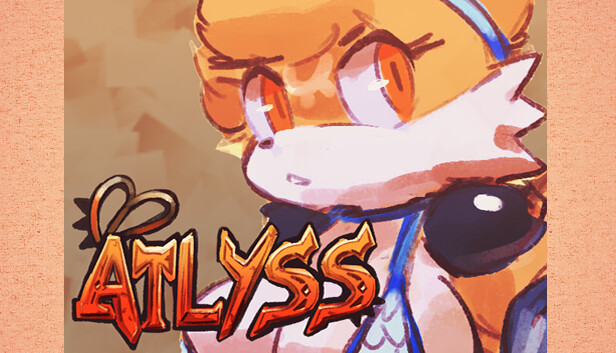
Atlyss is also another option, it is old-school MMO styled, but it is a singleplayer RPG with optional co-op:

 
@kibasnowpaw / @Mineru / @wendy-lebaron :-

Y'know, while not wishing to sound critical, I do find it it a little bit disturbing that games are able to engineer such social "dependence" on other people in such worlds. That's worrying.....at least to me.

Seems somewhat unnatural, to say the least.... If I ever found myself becoming embroiled to such an extent, I'd just 'drop' that game forthwith. I'm not looking for that kinda "hassle".

(shrug...)

For me, games should simply be a way to just relax and unwind for a while, leaving the participant free to return to real life with their batteries recharged. Or perhaps - never having been a dedicated 'gamer' - maybe I'm just taking a somewhat simplistic view of the whole shebang?


Mike. :confused:
 
Last edited:
@kibasnowpaw / @Mineru / @wendy-lebaron :-

Y'know, while not wishing to sound critical, I do find it it a little bit disturbing that games are able to engineer such social "dependence" on other people in such worlds. That's worrying.....at least to me.

Seems somewhat unnatural, to say the least.... If I ever found myself becoming embroiled to such an extent, I'd just 'drop' that game forthwith. I'm not looking for that kinda "hassle".

(shrug...)

For me, games should simply be a way to just relax and unwind for a while, leaving the participant free to return to real life with their batteries recharged. Or perhaps - never having been a dedicated 'gamer' - maybe I'm just taking a somewhat simplistic view of the whole shebang?


Mike. :confused:
Mike, I do not think your view is wrong at all. In many ways I agree with you.

Games should be something you can use to relax, unwind, and then return to real life with your batteries recharged. That is how it should be. The problem is that a lot of modern games are not really designed like that anymore. They are designed to keep you inside the system.

Daily rewards, battle passes, limited events, guilds, clans, ranked ladders, social pressure, FOMO, live service updates, Discord communities, “you need to log in or you fall behind.” All of that can turn a game from entertainment into an obligation.

That is also one of the reasons I have a problem with a lot of online games today. It stops being “I play when I feel like it” and becomes “I have to keep up.”

For me gaming is different though, because it has been part of my life since before I can really remember. It is not just a hobby I picked up later. It became part of my escape room, part of how I relax, part of how I deal with stress, loneliness, depression, and just life in general. I have played thousands of games over more than 30 years. At this point, saying “just stop gaming” is not realistic for me. I can stop for a while, but I will always come back.

Counter-Strike is probably the best example. I have played CS since it was a mod for Half-Life. So even when CS2 annoys me, even when I think the game has become worse in many ways, there is still that old pull. It is familiar. It is muscle memory. It is history. It is like the brain goes, “I need my fix,” even if part of me knows the game is not giving me the same feeling it did years ago.

That is not always healthy, and I know that. But it is also not as simple as “just drop the game.” When something has been part of your life for decades, it becomes tied to memories, identity, routine, and comfort.

I think this is also why some people with ADHD-type brains can get pulled hard into games. Not because they are weak, but because games are built around reward loops: quick feedback, clear goals, constant stimulation, progress bars, unlocks, stats, rankings, and novelty. That can hit the brain very strongly. A game gives structure and reward in a way real life often does not. The danger is when that structure becomes a trap instead of relaxation.

That is also why I started buying more physical games again. I like owning something that is not just tied to some online service or account. Right now I have around 225 games on disc from secondhand shops, mostly from the 2000s, with a lot of RTS and shooters. Some are older 90s games, and only a handful are account-locked. That matters to me, because physical games feel more like games and less like a service trying to keep me logged in forever.

So yes, I agree with your concern. Social dependence in games can be disturbing. When games start engineering obligation, pressure, and dependency, that is not just harmless fun anymore.

But for people like me, gaming is also not just “a bit of entertainment.” It is something I grew up with. Something I used to cope. Something I always return to.

The balance I try to find now is this: I still love games, but I do not want games to own me. I want to play them, collect them, preserve them, and enjoy them on my terms, not because some live-service system is poking my brain every day to keep me trapped.
 
@kibasnowpaw :-

As I've said, I'm NOT a 'gamer'. At any rate, I don't see myself as one.

On occasion - when I'm at a lose end - I'll 'lurk' on some of the gaming forums. No intention of creating an a/c, 'cos I'm not that interested, However:-

With respect to the entire business of microtransactions (battle passes? Loot boxes? Stuff like that, I believe...), I see a fair number of heated discussions on this subject.

It quickly becomes clear that any game studio which employs this stuff unwittingly - or perhaps intentionally? - creates a two-tier system.....and it shows. You have those with higher than usual salaries, with large amounts of disposable income, who see no issues with "buying" advantage as they progress through the game.....and clearly think nothing of it.

Of course, on the flip side you then have those with skill but modest incomes, who cannot afford all these microtransactions. The way forward is stacked against them, because advantage & opportunity for progressing is clearly geared toward those who "stump up" the readies whenever it's expected of them.

Yes, I can appreciate that game studios obviously have increasing overheads to cover, like everybody else. To me, though, this doesn't seem the right way to go about it.....

Like I said; I'm NOT a 'part' of this scene. This is just an observation, looking in from the outside.


Mike. o_O
 
@kibasnowpaw :-

As I've said, I'm NOT a 'gamer'. At any rate, I don't see myself as one.

On occasion - when I'm at a lose end - I'll 'lurk' on some of the gaming forums. No intention of creating an a/c, 'cos I'm not that interested, However:-

With respect to the entire business of microtransactions (battle passes? Loot boxes? Stuff like that, I believe...), I see a fair number of heated discussions on this subject.

It quickly becomes clear that any game studio which employs this stuff unwittingly - or perhaps intentionally? - creates a two-tier system.....and it shows. You have those with higher than usual salaries, with large amounts of disposable income, who see no issues with "buying" advantage as they progress through the game.....and clearly think nothing of it.

Of course, on the flip side you then have those with skill but modest incomes, who cannot afford all these microtransactions. The way forward is stacked against them, because advantage & opportunity for progressing is clearly geared toward those who "stump up" the readies whenever it's expected of them.

Yes, I can appreciate that game studios obviously have increasing overheads to cover, like everybody else. To me, though, this doesn't seem the right way to go about it.....

Like I said; I'm NOT a 'part' of this scene. This is just an observation, looking in from the outside.


Mike. o_O


Mike, honestly, your view from the outside is closer to the truth than you might think.

The two-tier system you describe is real whenever a game sells power, faster progression, better equipment, extra chances, stronger characters, inventory space, stamina, or access to systems that would otherwise require a large amount of time. One player may be more skilled, but another player can simply pay to remove the obstacles placed in front of them. At that point, the game is no longer only testing skill. It is also testing disposable income.

Not every microtransaction gives a direct competitive advantage. Some only sell cosmetics. But even then, the system can still create another kind of hierarchy based on status, rarity, fear of missing out, and who can afford to keep buying every new pass or skin. The advantage may not be extra damage or health, but the psychological pressure is still there.

I also do not think this is happening by accident anymore.

The financial reports show exactly why publishers keep doing it. Take-Two reported that recurrent consumer spending, including virtual currency, add-on content, in-game purchases, and advertising, produced around $5.2 billion and represented more than three quarters of its total revenue for its 2026 financial year.

Ubisoft reported that its own “player recurring investment,” meaning digital items, DLC, season passes, subscriptions, and advertising, represented more than 60% of its net bookings in 2025–26.

When that much money comes from keeping people inside a game and spending after the original purchase, it is obvious which part of the business executives will be told to expand.

It is not normally an investor sitting beside a developer saying, “Put this loot box here.”

The problem is the pressure built into the company. Investors and executives look at net bookings, monthly active users, engagement, recurring spending, retention, and growth. Those figures are easy to put into a spreadsheet.

Whether the player feels respected, whether the game has become exhausting, and whether the design is still enjoyable are much harder to measure.

That creates the disconnect I keep talking about.

The player sees a game.

The financial side sees a product that should continue extracting money every month.

The spending is also extremely uneven. One large study of loot-box spending found that the top 5% of spenders generated about half of all loot-box revenue in the data. It also found a relationship between heavy loot-box spending and problem-gambling severity.

That does not automatically prove that loot boxes create gambling problems, because it may also mean that these systems are especially effective at attracting people who are already vulnerable.

Either explanation should concern us.

Psychologically, these systems use several pressures at once.

With a battle pass, the player has paid for something that expires, so not finishing it feels like wasting money. That makes the person return even when they are tired of playing.

With a loot box, the reward is uncertain, so every failure creates the thought that the next one might contain what they want.

With limited skins and countdowns, the company creates urgency: buy now or lose the chance.

With online communities, rankings, guilds, and visible cosmetics, social comparison adds another push. People see what everyone else has and may begin to feel left behind.

That is not simply offering an optional hat. It is building a shop directly into the reward system of the game.

Regulators have also started taking this seriously.

The US Federal Trade Commission required Epic Games to pay $245 million over allegations that Fortnite used confusing interfaces and other dark patterns that led to unwanted purchases.

European consumer authorities have also criticised systems where virtual currency hides the real price, countdown timers create pressure, and children are directly pushed towards purchases.

Ubisoft is a good example of how far the disconnect can go.

They launched Ubisoft Quartz and advertised “Digits” as the first playable NFTs in a major AAA game. To me, that looked like another attempt to create a market around artificial rarity rather than asking what actually made the game better.

I genuinely think Ubisoft has damaged itself badly.

I am not saying bankruptcy is guaranteed, because nobody can honestly know that. But the financial trouble is real. For 2025–26, Ubisoft reported net bookings down by more than 17%, a non-IFRS operating loss of around €1.04 billion, and negative free cash flow of around €443 million.

The company describes what it is doing as a major strategic reset. Even so, its future plans still include accelerating live services, which shows how difficult it is for these companies to walk away from recurring monetisation once the whole business has been built around it.

This is why I become annoyed when people constantly say, “Vote with your wallet,” but then preorder the next expensive edition, buy the battle pass, purchase the skins, complain for two weeks, and repeat everything when the next game comes out.

Voting with your wallet only works when people actually accept the consequence of missing a game.

Companies do not care very much about angry comments if the sales figures still look good.

If enough people stopped buying these products consistently, not just for one week but every time, some studios would be forced to change. The difficulty is getting millions of people to hold the same line.

I have now made my own line.

I still play the digital games I already have, and I am not against every digital game existing. I also receive review copies through my curator work.

Today, for example, I was offered pre-release access to Dragon Dragon Fire Fire Deluxe. I will probably accept it and review it because I love games, and I also want to help smaller developers keep making them.

That is different to me from throwing more personal money into the same AAA machine.

I also sell the CS2 drops, skins, cases, trading cards, and booster packs that I receive. Depending on the month, that can give me around €5 in Steam Wallet credit.

Right now I have almost €8 from last month and this month. After a few months, that is enough to pick up a reasonable game without putting more money into Steam from my bank account.

I know that is still part of Steam’s closed economy. It is not real cash that I can withdraw. Steam Wallet credit has no cash value outside Steam and cannot normally be transferred to another person.

But it gives me a way to use what the platform gives me without continuously feeding it new money from my own pocket.

My bigger problem now is ownership.

Steam’s agreement says directly that its content is licensed, not sold, that the licence gives no ownership, and that normal game licences cannot be transferred to another person.

So I can sell a physical game disc secondhand, lend it, collect it, or give it away, but I generally cannot sell a digital Steam game after I am finished with it.

That is why I have started buying more physical games from secondhand shops.

I do not mind playing what I already have digitally, accepting review copies, or using Wallet credit earned from drops.

But I am no longer comfortable paying out of pocket for digital games when we are moving further away from ownership and closer to permanent rental controlled by accounts and licences.

So yes, Mike, I understand why you think this looks wrong from the outside.

Studios do have development costs, staff, servers, marketing, and increasing overheads. They need to make money.

But there is a difference between selling a good game at a fair price and designing the game around keeping people psychologically engaged with a shop.

When most of the money no longer comes from selling the game, it should not surprise anyone when the game starts feeling less like entertainment and more like a payment system with gameplay built around it.



Follow Linux.org

Staff online

Members online


Top